Is it really December 8th? It still feels like September based on this week's weather...time flies when you live in Florida!
Print by Hazel Nicholls
The semester is ending with or without me, and I've been reflecting on everything that's happened in the past four months.
In my lesson last week, I told my teacher: "I feel like I've done nothing this semester. I'm worried I'm going to fail flute lessons."
I had accomplished a few Karg-Elert Caprices and essentially, one movement of the Uebayashi Sonata. In my undergraduate career, I would knock off 10 or more pieces in a semester, and at least 20 etudes. Clearly, I'm feeling like a failure for not even completing one new piece in its entirety.
My teacher encouraged me to list all of the things I had done, reminding me that repertoire was not intended to be my focus this semester:
I changed my tonguing, improved the placement of my jaw, clarified the idea of support, improved vibrato, improved projection, changed the angle of my upper body allowing me to uncover more of my lower lip (therefore improving flexibility)... and I learned how to circular breathe!
What I learned this semester is that it can be terrifying to go through an inward journey. We're constantly comparing ourselves to those around us, and when you feel as though you have nothing to show on the outside, it becomes difficult to feel valuable.
I had to give up my comfortable habits of playing to replace them with better ones, and there were times when I was completely unable to make any sounds at all. My teacher knew I was ready to study this way, and she was aware that it was a healing process I needed.
There were times when I stopped believing in myself-- I stopped believing that I was good at anything. That's a very frustrating feeling to have when you stop and realize: "I'm pursuing a Masters degree in flute playing... and yet I can't make a sound." I always trusted the process. Even when I was frustrated, I was grateful for the opportunity to struggle, and I absolutely trusted my teacher. She is the most perceptive and intuitive person I've ever met. She knows her students better than they know themselves, and she fosters life-changing experiences during 50-minute flute lessons EVERY week. Honestly. I left EVERY lesson with tears.
I am learning to practice for myself and for my future, not for up-coming performances. Re-establishing my foundation will help me to improve more than practicing pieces ever will. During most of my performances this semester, my mind was saying: "I don't know how to play anymore!" Performing anyway was a chance to struggle, and a chance to grow.
The most important things I learned this semester:
1. Courage.
2. Trust. Trusting your teacher leads to self-trust.
3. Gratitude. For the opportunity to struggle.
4. Self-healing is vital, and it starts with being honest with yourself.
5. Letting go. For the opportunity to grow beyond what was previously possible.
"When you want something you've never had, you have to do something you've never done."
Saturday, December 8, 2012
Saturday, October 13, 2012
"Give me your elbows!" // Karg-Elert Video!
Another post inspired by a student!
While preparing to play a long passage of soft, repeated notes, I noticed my student's arm structure tense upward: her elbows and shoulders raised. I asked her if I could place my hands under her elbows as she played, and she agreed.
"Give me your elbows. Let them release into my hands." I asked her to play while letting me hold her elbows, and we were both amazed at how easy it was to play the long, difficult line at a very soft dynamic.
Amy Porter first introduced me to this idea, and it is astounding how much of a difference it makes. Inhibiting the habit of tensing the arm structure and bringing the elbows up is something that all flutists should be aware of. Not only does it become easier to breathe and move fingers freely, it also prevents pain.
Additionally, I have been promising myself that I would memorize Karg-Elert Caprice Number 4. I found myself having to stop to think logically about notes and patterns with this one, and I'm excited to take on more Caprices!
While preparing to play a long passage of soft, repeated notes, I noticed my student's arm structure tense upward: her elbows and shoulders raised. I asked her if I could place my hands under her elbows as she played, and she agreed.
"Give me your elbows. Let them release into my hands." I asked her to play while letting me hold her elbows, and we were both amazed at how easy it was to play the long, difficult line at a very soft dynamic.
Amy Porter first introduced me to this idea, and it is astounding how much of a difference it makes. Inhibiting the habit of tensing the arm structure and bringing the elbows up is something that all flutists should be aware of. Not only does it become easier to breathe and move fingers freely, it also prevents pain.
Additionally, I have been promising myself that I would memorize Karg-Elert Caprice Number 4. I found myself having to stop to think logically about notes and patterns with this one, and I'm excited to take on more Caprices!
Monday, October 8, 2012
Play Better by Doing Nothing
I'll just apologize in advance, but every post between now and December is going to contain some indication of my love for fall.
I would like to express that I miss foliage. I am also sad to have missed our cranberry harvest this year. (These photos were taken at home last October.)
Now on to flute-related fun! This post is inspired by an exciting lesson I had with one of my wonderful students.
After she played her piece once, I asked her simply to listen to what she was playing instead of trying to create sound.
"WOW" was my response. I am continuously surprised by how much of a difference this simple mental change can make in one's playing.
Her sound had opened up tremendously-- her tone was more resonant, articulation improved, the ends of notes were less abrupt, and I heard a greater sense of direction in phrases. She also gained a greater sense of presence in the room-- she looked effortless.
During his master class two weeks ago, Jean Ferrandis continuously asked each of us to "stop reading the music." He emphasized that the best musicians never read the music, but instead hear the sound they want. "You do not need to try to make the sound. When you hear the music, the sound will always happen on its own."
Hear the sound you want as you play. It's important to have a sound concept, either from another flutist's recording of a piece, another instrument, a color, a mood... sound can be inspired by anything, and your sound will automatically improve when you play with intention.
Listening is the key to creating an effortless and compelling performance, but it can be difficult to maintain this mentality for an entire piece. We lose focus, start thinking of other things, start inching closer to the notes on the stand, and we lose awareness of ourselves and the outside world.
Beginning a piece by saying: "It is my intention to listen to the music as I play" can make a tremendous difference. It also reduces the pressure we often feel to play perfectly. Our tendency is often to try to create sound-- what a relief it is to know that a great sound comes from doing nothing!
Open your ears to open your sound. It makes a bigger difference than you might realize!
I would like to express that I miss foliage. I am also sad to have missed our cranberry harvest this year. (These photos were taken at home last October.)
Now on to flute-related fun! This post is inspired by an exciting lesson I had with one of my wonderful students.
After she played her piece once, I asked her simply to listen to what she was playing instead of trying to create sound.
"WOW" was my response. I am continuously surprised by how much of a difference this simple mental change can make in one's playing.
Her sound had opened up tremendously-- her tone was more resonant, articulation improved, the ends of notes were less abrupt, and I heard a greater sense of direction in phrases. She also gained a greater sense of presence in the room-- she looked effortless.
During his master class two weeks ago, Jean Ferrandis continuously asked each of us to "stop reading the music." He emphasized that the best musicians never read the music, but instead hear the sound they want. "You do not need to try to make the sound. When you hear the music, the sound will always happen on its own."
Hear the sound you want as you play. It's important to have a sound concept, either from another flutist's recording of a piece, another instrument, a color, a mood... sound can be inspired by anything, and your sound will automatically improve when you play with intention.
Listening is the key to creating an effortless and compelling performance, but it can be difficult to maintain this mentality for an entire piece. We lose focus, start thinking of other things, start inching closer to the notes on the stand, and we lose awareness of ourselves and the outside world.
Beginning a piece by saying: "It is my intention to listen to the music as I play" can make a tremendous difference. It also reduces the pressure we often feel to play perfectly. Our tendency is often to try to create sound-- what a relief it is to know that a great sound comes from doing nothing!
Open your ears to open your sound. It makes a bigger difference than you might realize!
Wednesday, October 3, 2012
Happy October!
It's October! (Though based on the fact that it is 86 degrees, I'm going to call it "August: Part III.")
I missed my chance to post during the entire month of September, and that's a reflection of just how busy the first few weeks of school have been. Wonderful things have happened in the past month, and I feel incredibly grateful to be a member of such a thriving community of musicians.
1. I bought a piccolo! Burkart Professional model with Wave headjoint. I am in love. It has a gorgeous, flexible sound. I can even taper in the upper register! What a wonderful change it is to not be completely panicked through an entire rehearsal!
2. Jean Ferrandis visited our studio to teach master classes and present a recital. My jaw was on the floor every time he played, and his "Afternoon of a Faun" performance gave me the chills. It was such a joy to meet him!
3. Andover Educator and flutist Rhonda Cassano visited from Jacksonville to present a Body Mapping workshop, and she gave me a private lesson that completely reawakened some important ideas about breathing and movement. We first met at Amy Porter's Anatomy of Sound masterclass in 2011. I learned a lot from her!
4. Every single lesson I've had with Professor Amsler has been life-changing. She is an intuitive teacher, and she genuinely cares for her students, offering the most encouraging learning environment possible. We're going back to the fundamentals, and I feel that I'm on a wonderful journey that will lead me to more mature playing. I'm thrilled about this! She has helped me to clarify many of the Body Mapping ideas I've been confused about, as well. I'm so grateful to have such an incredible teacher!
I've been trying so many new ideas in the past few weeks that I'm still feeling overloaded. As I continue to refine these new techniques, I will be writing about them each week. Stay tuned for some exciting tips!
I missed my chance to post during the entire month of September, and that's a reflection of just how busy the first few weeks of school have been. Wonderful things have happened in the past month, and I feel incredibly grateful to be a member of such a thriving community of musicians.
1. I bought a piccolo! Burkart Professional model with Wave headjoint. I am in love. It has a gorgeous, flexible sound. I can even taper in the upper register! What a wonderful change it is to not be completely panicked through an entire rehearsal!
2. Jean Ferrandis visited our studio to teach master classes and present a recital. My jaw was on the floor every time he played, and his "Afternoon of a Faun" performance gave me the chills. It was such a joy to meet him!
3. Andover Educator and flutist Rhonda Cassano visited from Jacksonville to present a Body Mapping workshop, and she gave me a private lesson that completely reawakened some important ideas about breathing and movement. We first met at Amy Porter's Anatomy of Sound masterclass in 2011. I learned a lot from her!
4. Every single lesson I've had with Professor Amsler has been life-changing. She is an intuitive teacher, and she genuinely cares for her students, offering the most encouraging learning environment possible. We're going back to the fundamentals, and I feel that I'm on a wonderful journey that will lead me to more mature playing. I'm thrilled about this! She has helped me to clarify many of the Body Mapping ideas I've been confused about, as well. I'm so grateful to have such an incredible teacher!
I've been trying so many new ideas in the past few weeks that I'm still feeling overloaded. As I continue to refine these new techniques, I will be writing about them each week. Stay tuned for some exciting tips!
Thursday, August 30, 2012
Back to School!
Packing, moving, unpacking, upper respiratory infection, auditions, buying a new piccolo, getting to know a new city, new school, new people, hurricane panic...
A lot is happening. But mostly, I'm thrilled to be starting the semester as a teaching assistant at Florida State.
Because the practice rooms at FSU do not have music stands in them, I've felt encouraged to spend more time working in front of the mirror.
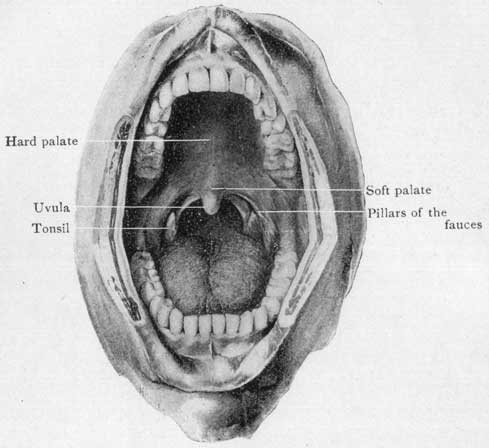
Today, I decided to open my mouth, stick my tongue out, and take a look at the back of my mouth and throat. The photo from the Soft Palate post is helpful.
In doing so, I realized that there's more space back there than I realized. I consciously know that the back of my tongue is the front of my throat, but in observing it in the mirror, I was able to understand how air moves up and out of my wind pipe and into my mouth. I could envision air spilling up and over my tongue. Additionally, I was able to relax my tongue, knowing that only the tip is necessary for articulation. After experimenting, I was able to double-tongue faster and with more "support."
What does "support" mean? My next post will identify what "support" is and is not.
A lot is happening. But mostly, I'm thrilled to be starting the semester as a teaching assistant at Florida State.
Because the practice rooms at FSU do not have music stands in them, I've felt encouraged to spend more time working in front of the mirror.
Today, I decided to open my mouth, stick my tongue out, and take a look at the back of my mouth and throat. The photo from the Soft Palate post is helpful.
In doing so, I realized that there's more space back there than I realized. I consciously know that the back of my tongue is the front of my throat, but in observing it in the mirror, I was able to understand how air moves up and out of my wind pipe and into my mouth. I could envision air spilling up and over my tongue. Additionally, I was able to relax my tongue, knowing that only the tip is necessary for articulation. After experimenting, I was able to double-tongue faster and with more "support."
What does "support" mean? My next post will identify what "support" is and is not.
Friday, August 10, 2012
The Soft Palate
Another quickie:
While attempting to play fluidly in the low register at a warm mezzo-forte, I found myself wanting to adjust to avoid cracked notes. I found myself pulling my embouchure back, which forced me to adjust within my mouth.
I know that being aware of the soft palate and the volume inside the mouth can increase resonance, so I reminded myself to "notice the soft palate," "allow the soft palate to lift."
(The soft palate is the "back" of the roof of the mouth. Trace your tongue along the roof of your mouth moving backwards. Towards the front, the roof of the mouth feels hard. As you move back, you reach a point where it becomes softer, almost squishy. This is the soft palate.)
Upon bring the soft palate into my awareness, I felt less need to pull my embouchure back. I had more control over my lips to shape the more fluid airstream that I was producing.
I find it helpful to picture the journey of the air while I breathe and play. I remind myself what movements are necessary to breathe, and I inhibit anything that could interrupt a natural breath, such as tension within the mouth.
Air comes first because it creates the sound. The lips shape the air.
This simple equation reminds me of the fundamentals while practicing, and helps me resolve issues such as cracked notes and lack of resonance.
While attempting to play fluidly in the low register at a warm mezzo-forte, I found myself wanting to adjust to avoid cracked notes. I found myself pulling my embouchure back, which forced me to adjust within my mouth.
I know that being aware of the soft palate and the volume inside the mouth can increase resonance, so I reminded myself to "notice the soft palate," "allow the soft palate to lift."
(The soft palate is the "back" of the roof of the mouth. Trace your tongue along the roof of your mouth moving backwards. Towards the front, the roof of the mouth feels hard. As you move back, you reach a point where it becomes softer, almost squishy. This is the soft palate.)
Upon bring the soft palate into my awareness, I felt less need to pull my embouchure back. I had more control over my lips to shape the more fluid airstream that I was producing.
I find it helpful to picture the journey of the air while I breathe and play. I remind myself what movements are necessary to breathe, and I inhibit anything that could interrupt a natural breath, such as tension within the mouth.
Air comes first because it creates the sound. The lips shape the air.
This simple equation reminds me of the fundamentals while practicing, and helps me resolve issues such as cracked notes and lack of resonance.
Relaxed Ears = Better Double-Tonguing?
Goodbye, Hamptons. I've ended work at the golf club and moved back home for a week. This time next week, I'll be in my new apartment in Florida!
I have four days at home to practice and pack, and my flute is like new after a COA. (My repairman is like a therapist. A new cork in the headjoint and I'm smiling once again.)
In my mad rush to feel confident with all of my audition repertoire, I came up with a new, helpful direction to avoid tension while double-tonguing.
I am practicing the third movement of CPE Bach's Concerto in D Minor. It is meant to be incredibly fast: every recording I've heard is a blazing prestissimo. While playing it up to tempo, I noticed tension in my head. It felt like I was tensing my ears.
So, I give myself a healthy intention: "Play with relaxed ears."
Big surprise: Tension reduction led to faster, smoother double-tonguing. (Who knew?!)
I have four days at home to practice and pack, and my flute is like new after a COA. (My repairman is like a therapist. A new cork in the headjoint and I'm smiling once again.)
In my mad rush to feel confident with all of my audition repertoire, I came up with a new, helpful direction to avoid tension while double-tonguing.
I am practicing the third movement of CPE Bach's Concerto in D Minor. It is meant to be incredibly fast: every recording I've heard is a blazing prestissimo. While playing it up to tempo, I noticed tension in my head. It felt like I was tensing my ears.
So, I give myself a healthy intention: "Play with relaxed ears."
Big surprise: Tension reduction led to faster, smoother double-tonguing. (Who knew?!)
Subscribe to:
Posts (Atom)