Thursday, August 30, 2012

Back to School!

Packing, moving, unpacking, upper respiratory infection, auditions, buying a new piccolo, getting to know a new city, new school, new people, hurricane panic...

A lot is happening. But mostly, I'm thrilled to be starting the semester as a teaching assistant at Florida State.


Because the practice rooms at FSU do not have music stands in them, I've felt encouraged to spend more time working in front of the mirror.

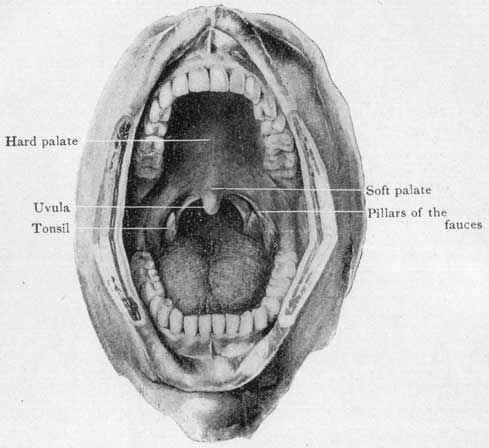
Today, I decided to open my mouth, stick my tongue out, and take a look at the back of my mouth and throat. The photo from the Soft Palate post is helpful.

In doing so, I realized that there's more space back there than I realized. I consciously know that the back of my tongue is the front of my throat, but in observing it in the mirror, I was able to understand how air moves up and out of my wind pipe and into my mouth. I could envision air spilling up and over my tongue. Additionally, I was able to relax my tongue, knowing that only the tip is necessary for articulation. After experimenting, I was able to double-tongue faster and with more "support." 

What does "support" mean? My next post will identify what "support" is and is not.

Friday, August 10, 2012

The Soft Palate

Another quickie:

While attempting to play fluidly in the low register at a warm mezzo-forte, I found myself wanting to adjust to avoid cracked notes. I found myself pulling my embouchure back, which forced me to adjust within my mouth.

I know that being aware of the soft palate and the volume inside the mouth can increase resonance, so I reminded myself to "notice the soft palate," "allow the soft palate to lift."

(The soft palate is the "back" of the roof of the mouth. Trace your tongue along the roof of your mouth moving backwards. Towards the front, the roof of the mouth feels hard. As you move back, you reach a point where it becomes softer, almost squishy. This is the soft palate.) 


Upon bring the soft palate into my awareness, I felt less need to pull my embouchure back. I had more control over my lips to shape the more fluid airstream that I was producing.

I find it helpful to picture the journey of the air while I breathe and play. I remind myself what movements are necessary to breathe, and I inhibit anything that could interrupt a natural breath, such as tension within the mouth.

Air comes first because it creates the sound. The lips shape the air. 

This simple equation reminds me of the fundamentals while practicing, and helps me resolve issues such as cracked notes and lack of resonance.

Relaxed Ears = Better Double-Tonguing?

Goodbye, Hamptons. I've ended work at the golf club and moved back home for a week. This time next week, I'll be in my new apartment in Florida!

I have four days at home to practice and pack, and my flute is like new after a COA. (My repairman is like a therapist. A new cork in the headjoint and I'm smiling once again.)


In my mad rush to feel confident with all of my audition repertoire, I came up with a new, helpful direction to avoid tension while double-tonguing.

I am practicing the third movement of CPE Bach's Concerto in D Minor. It is meant to be incredibly fast: every recording I've heard is a blazing prestissimo. While playing it up to tempo, I noticed tension in my head. It felt like I was tensing my ears.

So, I give myself a healthy intention: "Play with relaxed ears."

Big surprise: Tension reduction led to faster, smoother double-tonguing. (Who knew?!)

Wednesday, August 1, 2012

Making Slow Practice Meaningful

Is it just me? Or am I being haunted by slow practice?


Tons of articles are popping up about slow practice. A stranger visited and discussed it with me in my kitchen. People discuss practicing golf slowly at work. I swear I saw a commercial about it:
Erica Sipes from Beyond the Notes graciously shared these quotes on her Facebook page:

"One must practice slowly, then more slowly, and finally slowly." 
-- Camille Saint-Saens

"....You cannot achieve speed by speedy practice. The only way to get fast is to be deep, wide awake, and slow. When you habitually zip through your music, your ears are crystallizing in sloppiness." ....Pray for the patience of a stonecutter. ....Pray to understand that speed is one of those things you have to give up - like love - before it comes flying to you through the back window."
-- The Listening Book by W.A. Mathieu, p. 101.


Slow practice is consuming my thoughts. So how has this influenced my most recent practice sessions?

A quote from Bill Plake sums it up nicely: "The main aim of slow practice: to learn how to move from note to note through release and balance."
Slow practice has become a wonderful opportunity for me to really integrate body mapping techniques. I've become aware of how I change from note to note. I find that I tense my neck at certain moments, my arms at others. It's like turning a microscope on: bad habits jump right out.

It is important to practice with intention. Therefore, a high level of awareness is necessary to observe, experiment, discover, and memorize healthy performance habits. And there are many things to become consciously aware of when practicing. 

When I practice slowly, I'm memorizing how it feels to play with... inclusive awareness, balance, freedom at the joints, awareness of spinal movements, a grounded feeling/equal contact of feet on the floor, freedom of the jaw and face, space between the teeth, freedom of the tongue, effective volume of the oral cavity, ease of vision, a feeling of release in the arm structures, awareness of rib movement, inhibition of my habit to maintain expansion by tensing...

And I used to think slow practice was boring.

While practicing with physical awareness, I'm naturally finding a greater musical awareness.

I continuously find that performing with ease of the body leads to easy, natural expression. Logical phrases feel intuitive. Interpretations become more compelling. Breathing is not a concern. All of it feels easy. 

That's why I'm practicing slowly.


Thursday, July 26, 2012

How to Cope With a Bad Tone Day

We all have bad tone days. They are usually accompanied by the words: "I can't play." Or "I sound like a third grader." On such days, I typically want to crawl back into bed or change my major.

I don't dive right into long tones on "bad tone days." I use long tones to memorize how it feels to play with ease and resonance. I start them once they feel more productive than frustrating. 


These things make me feel better:
  1. Warm up your body. The body moves best when it is free of tension. Try some tension relieving stretches or yoga poses. Go for a run. Dance in front of a mirror. At UNH, I would walk up and down three flights of stairs to get a drink of water. When I got back to my practice room, my blood was pumping and I could breathe more naturally while playing.
  2. Relax. Reduce stress. Meditate. Take care of something that's taking over your thoughts.
  3. Lay in constructive rest for five to ten minutes. Place your hands on your ribs to feel them moving. Watch your body breathe. Think about the gathering and lengthening of the spine. Release the A-O joint.
  4. "Bobble" at the A-O joint while playing to avoid unnecessary tension.
  5. Check your flute: Leaks can cause an unfocused sound. Some people recommend a COA every year, but I get them done twice a year. It depends on your flute and level of activity.
  6. Is your cork loose?
  7. Blow warm, moist air onto the pads. (James Galways does this in a masterclass video on YouTube. It especially helps with footjoint notes.)
  8. Change rooms, if possible. A livelier room is more forgiving. I like to spend some time warming up in a better room, then return to a dull room so I can hear myself better for tone exercises.
  9. Sing. Do vocal warm-ups. Sing, then play the note.
  10. Sing and play simultaneously. For some reason, I've resorted to sing-playing through the exposition of Mozart's G Major flute concerto as a warm-up. I sound better playing it normally after I've done this.
  11. Do other extended techniques (from Robert Dick's Tone Development Through Extended Techniques) such as whistle tones, timbral trills, multiphonics, bamboo tones... Play through one of Robert Dick's Flying Lessons etudes. These let you work on embouchure flexibility while avoiding straight tone.
  12. Harmonics. Harmonics. Harmonics. There are so many ways to practice them. The most effective for me is playing a harmonic, then slurring to the true fingering. This really helps me to feel a sense of openness and resonance when I play the actual note.
  13. Keep your flute warm. From then end of August to about the end of October, the band room at UNH is about 12 degrees. My flute is cold. My body is cold. It's impossible to sound good. I resorted to bringing a scarf for my flute. Also try complaining until someone turns the air conditioner off. (This does not work at the University of New Hampshire, however.)
  14. Change vowel sounds. Experiment with each possible vowel sound. You might find that your natural tendency isn't the most effective for creating a resonant tone: On "bad days," I realize that my tendency is "eeee" or "ehhh" which results in a thin tone. "Ahhh," "ooooh," and "augh" allow warmer air, producing a warmer sound. Think of how each vowel sound changes the space inside the mouth. Greater volume increases resonance.
  15. If time allows, come back later. I always sound best at night because my body is naturally warmed up from moving all day. As a personal note, I typically have less IBS pain in the evening, making it easier to practice.
  16. Listen to a great recording. Get the flutist's tone in your head.
  17. Mentally practice a tone study. Think about how it would feel and sound when played with ease and resonance. Imagine it three times in a row. Then play it. 
  18. Inclusive awareness. Stop analyzing and just play. Listen back. Get to know the space behind you. Let your sound "open" by not trying. 
  19. Play in the dugout position, while squatting, while laying on the floor, while bouncing on a balance ball, while pretending to sit on a bench...
  20. Are you covering too much of the embouchure hole? Is your flute too high or low on your chin? If your flute is open-hole, are you covering the holes entirely?
  21. If all else fails,  vivid mental practice can be extremely effective. (Spend time mentally practicing in the morning, then return to your instrument later. You might be surprised!)
How do you cope with a bad tone day?

Wednesday, July 25, 2012

Late-Night Kitchen Recitals // Who Do You Play For?


On Sunday night, we had a late-night visit from two friends of my host family.

One of them went to school for music and is now working in insurance.

My host mentioned that I am a musician, and at 11 pm said, "Go get your flute!"

I played some C.P.E. Bach in a kitchen recital while my roommate was making Muddy Buddies, (known in this house as 'puppy chow.')

The musician in my audience of five was an interesting person to talk to. At first, he didn't say much, but I could he was really thinking. He asked to see my score.

He started asking me questions. The first was, "which part is the hardest for you?"

I pointed out a section in the third movement of the Concerto in D Minor, and explained that it was so difficult because there wasn't a place to breathe. He asked me to play it for him, and he was interested to see how I would handle the passage.

He complimented my technical ability, and then proceeded to analyze my score while I snacked on Muddy Buddies.

He then explained to me and my roommate that he once had a professor tell him, "choosing a major is simply choosing a point of view." Choosing what you study in college influences how you view and interpret the rest of your life. He chose music. So did I. He "views the world in harmonies," and admits that he is influenced by music in his work with insurance. Interesting thought.

Looking at my score again, he asked me if I enjoyed the music I was playing. I was quick to say yes, but he had a different angle in mind. He showed me what he meant by asking me to play one phrase from the Concerto. He asked me to cut the tempo in half. Then again. "Watch this, it's going to feel like a lullaby," he said. He pointed out that there is SO MUCH in that one phrase that needs to be enjoyed. At full speed, most of it gets tossed away. There are complex harmonies in the movement that need to be appreciated.

I read the recent article about slow practice from the Bulletproof Musician the day before, so the idea was on my mind. I told him that I try to practice slowly, but it's mindless. I'm usually just trying to get the notes. The idea of enjoying it, however, was really encouraging. Slow practice is about discovery.

He later asked me, "who do you play for?" I could tell that he was challenging me with a deep and personal question. First I said, "myself." He then led me to answer, "People who appreciate it...People that do this, too." He respected my answer, and told me that I do have a choice.

I recalled the most exciting performances that I've given, and they're the ones in which I was playing for other musicians or a room full of flute players. That might be selfish, but it's honest.

Though I've thought about what I want to do when I graduate, I haven't thought of it in a "choose your audience" kind of way. Music is about communicating with people. Who do you want to communicate with? This is an interesting question to grapple with.

Who do you play for?


Tuesday, July 24, 2012

Tools for a Creative Practice Session

Every time I need to order something from Flute World, I spend hours carefully shopping for everything else I might need so I can have it all shipped at once.

A FluterScooter bag has made its way onto my wishlist, so I've spent an entire day online shopping for anything else I could possibly need until (at least) September.

I came across Jennifer Keeney's Creative Practice Recipes. I've heard wonderful things about them, and I'm currently trying to make my own practice sessions as creative and inspired as possible; I definitely need some outside ideas. There are two sets of Creative Practice Recipes, and unfortunately, set one is back-ordered.

I'm impatient. So in the meantime, I created my own.

I love craft projects. And I REALLY love Staples.

I was showered and at the store before 10am. (On my day off!)


I had two ideas for creative practice tools:

1. Index cards similar to Jennifer Keeney's Creative Practice Recipe cards.
2. Popsicle stick practice prompts.

 
For the popsicle sticks (which were hard to come by in the Hamptons), I bought pencil cups and sticky labels. Each cup is a category: 


I have tons of tone and technique exercises that I love doing, but I can't do all of them in their entirety every day. There are just too many. I've tried making calendars and schedules for each, but it was too complicated and overwhelming. 

I'm excited about this.

The popsicle sticks in the Technique cup each have a different technique exercise, such as Taffanel-Gaubert #1, thirds, extended scales, arpeggio trill study... etc. The tone cup is similar.

I created a stick for each major and minor key, and a variety of articulations, as well. 

The "How?" cup contains adjectives that can govern style, color, vibrato, and so forth: Dark, ethereal, Baroque, stormy, tenderly, mysteriously, sensually, like a cello...

I'm planning to use them in several ways:
  • Choose three major keys each day (and their relative minor keys), and do all of the technique exercises in those keys. Don't put them back in the cup until you've gone through all keys.
  • Choose several technique exercises, do them in all keys, and use different articulations/styles.
  • Experiment with different styles in etudes and repertoire.

I also bought an index card box to contain my own Creative Practice Recipes. I'm planning to include my favorite Body Mapping reminders, stretches, yoga breathing exercises, quotes from teachers and master classes, and anything else that might be a helpful reminder or a creative solution.

I'm looking forward receiving a new FluterScooter bag and Jennifer Keeney's Creative Practice Recipes soon!

Jennifer Keeney's website features tons of wonderful and inspiring articles. As does her blog: http://practiceideasforthewholemusician.blogspot.com/

I'm thinking of purchasing her ebook as well: http://www.jenniferkeeney.com/proddetail.asp?prod=231_eBook


I've created new inspirational flute boards on my Pinterest, too: http://pinterest.com/stuffahju/

Have you used Jennifer Keeney's Recipes?

How do you practice creatively?