Sunday, March 6, 2016

Intention and Curiosity

Many of our challenges as musicians involve overcoming mental barriers. When something goes wrong while practicing, it can be easy to repeat over and over, and judging each repetition as good or bad.


Mindless, repetitive practice has been outed as potentially destructive and sometimes harmful, and can be a source of anxiety versus learning. In its place, mindfulness and intention open us up to opportunities for discovery and help us learn with greater efficiency.

Setting an intention changes our mental state, allowing us to refocus on a simple musical or physical idea. Unlike a goal with an ending or point of achievement, an intention is on-going. If we stray from our intention, we can always come back at any time, reducing the pressure of perfection that can be associated with goal-setting.

An intention can be a simple word that we choose to embody or experience as we play. We can also phrase an idea as a question of curiosity to deflect anxiety and reduce self-judgement.

Here are some examples:

- What is it like to experience awareness of the entire room while I play?
- Why is so easy to play beautifully?
- I intend to embody brilliance.
- Feet Grounded
- Smoky Color
- Easy Fingers
- Why is is to easy to play pianissimo?
- I intend to continually release my jaw as I play.
- Brilliance
- Like a Violin
- Openness
- Listening to the sound in the room
- I intend to see and feel color as I play.
- Softness of Limbs
- What is it like to listen and experience each moment?
- What is it like to play as if I composed the piece myself?
- Play Gracefully
- I have plenty of breath. (Even if I feel I don't, I always tell myself this in the last phrase of the Mendelssohn Scherzo excerpt and it works!)

See more on the benefits of intention for overcoming performance anxiety in this post from The Bulletproof Musician:
http://www.bulletproofmusician.com/how-to-make-performance-anxiety-an-asset-instead-of-a-liability/

Sunday, February 28, 2016

Grounded and Floating


During a difficult practice session featuring Paganini Caprice No. 5, I found myself asking: "Are my feet grounded?"

Nope. Definitely not.

"I Am Rooted But I Flow" - Virginia Woolf

The thought of ease beginning with a grounded, rooted connection between the feet and the floor has not found its way into my practice session for a while. After making this subtle change, all the difficulties I experienced with breathing, discomfort, and supporting the airstream while double-tonguing improved.

From the place of grounded feet, I began to find ease in the legs, reminded myself of the hip joints and movement of the pelvic floor while breathing, and the gathering and lengthening of the spine.

While my feet remained rooted, I resisted the urge to shift my weight from the floor during difficult moments or while taking a breath, and instead focused on simultaneously grounding further while the rest of the body floats upward during these moments. I also felt better able to relax the arm structure while the torso released upward.

Another breakthrough (that I have over and over), was finding ease in producing soft high notes, the most difficult thing for me. Resisting the urge to change my rooted-but-flowing state, and instead floating and grounding even more made pianissimo high notes effortless.


What is it like to play with grounded feet?

What is it like to remain grounded at points of difficulty? 


Grounding Yoga Poses:
http://www.doyouyoga.com/5-grounding-yoga-poses/

Sunday, January 17, 2016

Warm Up Essentials: Armpit Spacers and Earplugs


A few weeks ago while warming up for my first concert with the Cinematic Symphony (STAR WARS: The Music Awakens!), I posted a photo of my warm-up essentials, Armpit Spacers and Ear Plugs.


A few people asked what the arm spacers are for, so I recently followed up with a quick demonstration and explanation:

"Skeleton's first video is an armpit spacer explanation by request! Placing pool noodles or smaller foam cylinders under the arms while playing serves as a reminder of the space available between the arms and the ribs. Notice how much space exists beneath his upper arm and notice the honey comb shape of the ribs! I certainly have a habit of clamping my arms down over the ribs and compromising the width across the collar bones while playing. Encouraging both space for the ribs to move naturally while breathing, and freeing the arm structure can make a world of difference in breathing and resonance. The spacers serve as a reminder and resting place for the arms. These were provided to me by Andover Educator Andree Martin, and are made of pipe insulation found at Home Depot or Lowes."

In the warm-up-before-the-warm-up, or the pre-opening-the-case-warm-up, I typically take time to do several yoga poses including child's pose or wide-leg child's pose to simply focus on breathing while letting go. I stay for several minutes and take the time to make myself aware of how it feels to breathe. Is it tight in certain spots when I reach the peak of inhalation? Do I flow between inhalation and exhalation without adding extra tension or effort? How do the muscles of my arms and legs react to the various stages of breathing?

I take a few moments to find balancing in standing, translating the ease of breath from child's pose into an upright position closer to playing. At this point, I will add armpit spacers to enhance the experience of the arm structure moving over the ribs while breathing, and lightly swing side to side to allow the arms to move freely with the help of the spacers. When I finally pick up the flute for my first notes, my mindset is focused and I am consciously encouraging release.

If I were to simply put my flute together and charge full-speed-ahead through Taffanel-Gaubert scales, there's a greater chance of feeling scattered and frustrated with throat tension and a stifled tone, which only increases nervousness. Taking time to focus and release before taking the flute out of the case puts me in the right mindset to focus and achieve ease and resonance right off the bat. When my first notes feel effortless, my pre-concert confidence gets a boost.

On this particular day, I put in earplugs for my first notes to continue to mindset of feeling versus hearing. Professor Eva Amsler introduced this idea to me at FSU, and I have learned so much about myself and practicing in the process. The idea of becoming process-oriented versus results-oriented provides an opportunity to fine-tune without judging the results. My first go-to warm-up of the day with earplugs is Robert Dick's first singing and playing exercise from Tone Development Through Extended Techniques

See more on Instagram and follow me @joleneflute!

Wednesday, July 10, 2013

Practice Wisdom from Julius Baker

In an effort to pass time at work, I've been reading book after book after book. (It feels good to finally read all the books that I impulsively bought from Amazon over the last school year!)

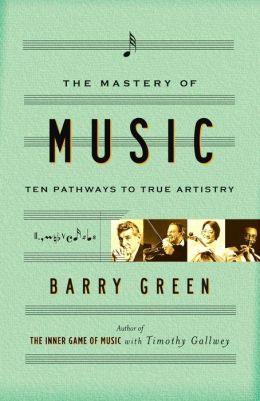
I just finished reading "The Mastery of Music: Ten Pathways to True Artistry" by Barry Green, author of the prominent book, "The Inner Game of Music."


I highlighted a number of passages and folded tabs on half of the page corners to be able to go back and reflect on my favorite tips, which will likely result in a follow-up post.

In The Mastery of Music, Green interviewed a number of musicians and teachers in an effort to report on what he considers to be the ten pathways to artistry, which he relates to various groups of musicians. Not surprisingly, the chapter that resonated with me was, "Discipline," which he associates with woodwind players.

Green articulates wonderful advice about how to practice versus how much to practice, and includes the wonderful quote from Julius Baker:
"You'll never make a mistake if you never make a mistake."


Green emphasizes that mindless practice for prolonged periods can be counter-productive. (Also see Bulletproof Musician!) If we practice things too rapidly or mindlessly, we have a higher chance of making mistakes. There will come a point where we will have to undergo the difficult task of unlearning and inhibiting our bad habits and replacing them with new ones, which proves to be an inefficient use of practice time. Baker ingeniously articulates that it is possible to avoid this laborious process by not ingraining mistakes in the first place.

What seems to be the best advice for what should be happening when we practice?

Practice slow enough to avoid making any mistakes. Yes, it feels too easy.
If it feels too boring, however, there's a good chance your focus is not on the present.


We like to think that we're not really accomplishing anything when we remove the challenge of speed. (I am guilty of this.) However, slowing down to avoid mistakes altogether provides the opportunity to put a microscope on what we're actually doing. We are able to answer the questions of "what am I doing?" and "how am I doing that?" when we play slower. We will more likely be able to figure out why the E-flat cracked or why the C-sharp was too sharp when we're going slow enough to make more critical observations. (Also called "micro-discoveries!") This gives us the opportunity to observe and learn more about ourselves and the music, which can result in faster, more notable improvement.

A point that Green emphasizes is the importance of learning first, then practicing.  
Observe what you're doing, learn how to best achieve the desired outcome, then practice the optimal solution.

Wednesday, May 29, 2013

Today's Practice Notes: Melting Like a Snow Cone in Phoenix

WARM-UP

What's more fun than warming up with long tones in the morning? Singing and playing! What's more fun than just singing and playing? Playing Ian Clarke's Tuberama while blasting the backing track on surround sound speakers!


Singing and playing is one of my favorite ways to warm up. I play a few test notes, then spend 5-15 minutes improvising with singing, beat-boxing, extended techniques, breathing exercises, and so forth. (Rhonda Larson's warm-up class at the Florida Flute Association Convention featured dancing while improvising to a beat track! Who says you can't have fun while warming up?)


PRACTICE NOTES

THE BODY, THE AIRSTREAM, & THE PHRASE

  • When the airstream has a sense of forward-moving energy, phrases have a sense of forward-moving energy. 
  • The phrase is supported by the airstream, and gives a sense of direction.
  • When the body is tense, frozen, or still, so is the airstream. The phrase lacks direction and life.
  • The airstream has fluidity and ease when the body has fluidity and ease. A phrase has life when the body is free, moving, resilient. Freedom leads to resonance.


RHONDA LARSON'S MOVIN' ON FOR SOLO FLUTE

My first flute teacher and band director is retiring after 27 years at my elementary school, and I have the great honor of performing at his retirement celebration, along with many other former students.
I decided to play Movin' On by Rhonda Larson: It's symbolic, it's beautiful, and it's a less-than-five-minute piece for solo flute!

I recorded myself playing close to tempo after I had warmed up, and felt as though I had a grasp on the sound and body feeling I wanted.

After watching the recording, I noted several things:
  • I noted the places where I stumbled the most, and used this as a guide to break the piece into chunks that I will focus on over the next week.
  • The first note of each measure is a low note, generally followed by higher notes. I observed my embouchure changing in every measure.
  • Because I felt the need to re-set my embouchure for the low notes that started each measure, I failed to blow through more than a measure at a time. It disturbed the phrase, and the notes lacked the "shimmering" quality I was after.

I chose to work on the first section that had a lot of hesitation, which begins on a low F.

"What would I tell my student?" 
Watching myself on the recording put me in the position of the observer, much like I am when I'm teaching. I am able to watch and think about what I could do differently, which is why recordings are an essential tool for speeding up the learning process.
  1. "Play a really tense low F. Lift the tongue in the mouth, tense the lips, jaw, throat, toes..."
  2. "Keep blowing, then melt into the floor. Melt the body around the airstream. Let go of everything. Go through a mental checklist of things let go of: A-O joint, tongue, ankles, fingers, eyelids, tailbone, jaw, eyebrows, ears... Keep going until you've gone too far, then begin to add back." (Try Kay Hooper's "Goldilocks Effort" from the book, Sensory Tuneups!)
Result
  • When my body was tense:
    • I felt overwhelmed and consumed mentally.
    • My sound was muffled and lacked "shimmer" or resonance.
    • I felt that I was not in control.
    • I couldn't hear myself due to the mental cloud that bodily tension caused.
  • After instructing myself to "melt:" 
    • I immediately sensed a mental shift: I became an observer and felt less panicked.
    • I felt that I was in control.
    • I could hear myself better.
    • My sound opened and resonated through the house. 
    • There was a natural vibrato that added life to the spinning sound.
    • There was direction and a sense of phrase in a single note. (See above!)
I went back to the original measure, playing slowly to maintain "melted-snow-cone-status." (I can't help a good Mrs. Doubtfire Reference!)


MORE WAYS TO PRACTICE
I love savasana in yoga, especially when the instructor gently guides you to relaxation from head to toe. (I always say, "Oh, wow!" when they mention "relaxing behind the eyes.")

Practice letting go in savasana, and try a guided meditation video. Observing and releasing tension in the body without a flute makes it easier to become aware of tension while playing.

Try Savasana-Inspired Long Tones to release tension while playing!


Monday, May 20, 2013

Open Sound: Why I Love Middle C!

I'm thrilled to pieces. I want to stand on a roof and scream, "I like my sound!" Even more, I like how it feels to play this week. Why?

A colleague recently told me about a sound exercise that our teacher loves, which involves an etude with a lot of intervals and octave changes. She suggests moving everything into the comfortable middle register and practicing with the goal of staying open.

I did this several days ago, and remembered what it felt like to just breathe and let sound happen. I wasn't forcing anything into place, just exhaling. (With a flute on my face.) I allowed air in my cheeks, and I felt resonance happen, instead of trying to make it happen.

I found it easiest to achieve this open feeling when I left the tongue out entirely. I simply let the air start the sound. I also stopped worrying about where my lips should go or if my tongue was tense or in the way.

I was so thrilled with my sound, I immediately tore my bookshelves apart looking for more and more things to play! (I'm supposed to be packing to leave for the summer...) It became fun to play everything with this exact same open feeling. I've been trying to overcome my habits of making micro-adjustments from note to note, and in doing so have added some unnecessary panic and therefore tension.

Pretending that EVERY note was the same as an easy-breezy middle C did the trick! Whenever I felt my throat begin to tense, I just played middle C again and memorized the feeling.

The feeling of support that accompanies this is the natural exhale, which provides an easy, constant airstream. One of my favorite exercises is from David Vining's Breathing Book.

Watch his video demonstration here:


I played through two whole books of etudes, and realized (for the hundredth time) that sound is the most important part of practicing technique. It's really about finding the most ideal "tone set-up," and inhibiting habits that could disrupt it. Somehow, it becomes easier to move fingers faster and more evenly when you are able to trust and stay open.

Tuesday, May 14, 2013

First Year? Check! Hello, Summer!

Mid-May? Already? (Does every post start with something about how time flies?)

Summer seems to be the time for blogging since I'm left to my own devices to improve as much as possible before the fall semester begins. I'm thrilled to be returning to Bridgehampton this summer, and I look forward to having plenty of time to practice, write, relax at the beach, and add to my collection of creative Starbucks misspellings. And work, of course. This whole thing started because I had plenty of "thinking time" at work last summer! (What a difference a year makes!)

While finalizing summer plans, I'm still in disbelief that I've finished the first year of my Master's degree at FSU. Of all the wonderful things I learned about music performance and pedagogy this year, the lessons I've learned about myself and life in general are by far the most prominent.

Before I go into the deep, human revelaions of my first year of grad school, here's a recap of some of my favorite moments, and of course, exciting flute tips!
  • I traveled to Orlando in January to attend the Florida Flute Association Convention. I performed with the FSU Flute Choir and the Graduate Flute Ensemble. My top 3 favorite things about the convention? 1. Hearing Rhonda Larson perform Be Still My Soul, 2. Finally buying an Altieri flute backpack (in navy!), and 3. Eating at Steak n' Shake for the first time ever.
  • I had the wonderful opportunity to play piccolo with the FSU Symphony Orchestra this semester! The high level of commitment and artistry from my colleagues was awe-inspiring, and Dr. Alexander Jimenez is an incredible musician and a wonderful human being. (I was also very happy to spend more time with the beautiful Burkart piccolo I purchased last fall!) Exciting moments include: Performing Dohnanyi's Symphony No. 2 and recording it for the Naxos label, and performing Rimsky-Korsakov's Scheherazade last month!
  • I took beginning baroque flute this semester I found it extremely enjoyable. I'm thrilled to take the advanced class next fall. I learned a lot about Baroque music and style, and I finally came to understand the importance of the lumbar spine in support. I have previously over-exaggerated the arch of the lumbar spine in an effort to feel my sit-bones. I thought I was maintaining the curves of the spine, when I was actually adding tension to my lower back, making it very difficult to support by maintaining resilience in the pelvic floor. I'm spending a lot of time practicing while sitting or leaning against a desk to let go in my lower back, and was reminded to bend my knees while standing.
Okay, the best things I learned this year:
  • I became aware my ability to positively influence the people around me and to offer my views in a non-threatening, understanding way. Although I did not necessarily intend to change others' opinions, I noticed that I could persuade others to value my views.
  • I'm becoming extremely courageous. After learning Ian Clarke's Hatching Aliens and Joseph Jongen's Sonata, Op. 77 in a very short time for my first solo recital, I realized just how much I am capable of. (And don't think I didn't complain about "having to rush to learn difficult pieces," and said things like: "I took 6 months to prepare my senior recital!" for most of the experience!) I'm more willing to take on challenges for the experience to learn, rather than turning them down due to self-doubt.
  • Self-respect comes first. Put it on your priority list. (Also, my semester got much better when my teacher assigned me to put "Eat chocolate cake" on my to do list as a gesture of self-kindness.)
  • I became aware of my physiological reactions when nervous or frustrated, and learned that accepting negative feelings is the only way to feel in control of them.
  • I learned to be okay with being uncomfortable. (By accepting that I feel uncomfortable!) I feel ready to give up expectations and "safe" options for the chance to seek something greater- true self-fulfillment. It's okay to change the plan! 
I learned something new every day this year, and have spent the past two weeks simply reflecting. I'm sure these things will continue to sink in, and will lead me to think and practice in new ways. I'm excited for things to come, and look forward to more frequent posts from all of my summertime-fluting!


Saturday, December 8, 2012

It's What's On The Inside That Counts

Is it really December 8th? It still feels like September based on this week's weather...time flies when you live in Florida!

                                                                  Print by Hazel Nicholls

The semester is ending with or without me, and I've been reflecting on everything that's happened in the past four months.

In my lesson last week, I told my teacher: "I feel like I've done nothing this semester. I'm worried I'm going to fail flute lessons."

I had accomplished a few Karg-Elert Caprices and essentially, one movement of the Uebayashi Sonata. In my undergraduate career, I would knock off 10 or more pieces in a semester, and at least 20 etudes. Clearly, I'm feeling like a failure for not even completing one new piece in its entirety.

My teacher encouraged me to list all of the things I had done, reminding me that repertoire was not intended to be my focus this semester:

I changed my tonguing, improved the placement of my jaw, clarified the idea of support, improved vibrato, improved projection, changed the angle of my upper body allowing me to uncover more of my lower lip (therefore improving flexibility)... and I learned how to circular breathe!

What I learned this semester is that it can be terrifying to go through an inward journey. We're constantly comparing ourselves to those around us, and when you feel as though you have nothing to show on the outside, it becomes difficult to feel valuable.

I had to give up my comfortable habits of playing to replace them with better ones, and there were times when I was completely unable to make any sounds at all. My teacher knew I was ready to study this way, and she was aware that it was a healing process I needed.

There were times when I stopped believing in myself-- I stopped believing that I was good at anything. That's a very frustrating feeling to have when you stop and realize: "I'm pursuing a Masters degree in flute playing... and yet I can't make a sound." I always trusted the process. Even when I was frustrated, I was grateful for the opportunity to struggle, and I absolutely trusted my teacher. She is the most perceptive and intuitive person I've ever met. She knows her students better than they know themselves, and she fosters life-changing experiences during 50-minute flute lessons EVERY week. Honestly. I left EVERY lesson with tears.

I am learning to practice for myself and for my future, not for up-coming performances. Re-establishing my foundation will help me to improve more than practicing pieces ever will. During most of my performances this semester, my mind was saying: "I don't know how to play anymore!" Performing anyway was a chance to struggle, and a chance to grow.

The most important things I learned this semester:

1. Courage.
2. Trust. Trusting your teacher leads to self-trust.
3. Gratitude. For the opportunity to struggle.
4. Self-healing is vital, and it starts with being honest with yourself.
5. Letting go. For the opportunity to grow beyond what was previously possible.


"When you want something you've never had, you have to do something you've never done."

Saturday, October 13, 2012

"Give me your elbows!" // Karg-Elert Video!

Another post inspired by a student!

While preparing to play a long passage of soft, repeated notes, I noticed my student's arm structure tense upward: her elbows and shoulders raised. I asked her if I could place my hands under her elbows as she played, and she agreed.


"Give me your elbows. Let them release into my hands." I asked her to play while letting me hold her elbows, and we were both amazed at how easy it was to play the long, difficult line at a very soft dynamic.

Amy Porter first introduced me to this idea, and it is astounding how much of a difference it makes. Inhibiting the habit of tensing the arm structure and bringing the elbows up is something that all flutists should be aware of. Not only does it become easier to breathe and move fingers freely, it also prevents pain.


Additionally, I have been promising myself that I would memorize Karg-Elert Caprice Number 4. I found myself having to stop to think logically about notes and patterns with this one, and I'm excited to take on more Caprices! 


Monday, October 8, 2012

Play Better by Doing Nothing

I'll just apologize in advance, but every post between now and December is going to contain some indication of my love for fall.


I would like to express that I miss foliage. I am also sad to have missed our cranberry harvest this year. (These photos were taken at home last October.) 

Now on to flute-related fun! This post is inspired by an exciting lesson I had with one of my wonderful students.

After she played her piece once, I asked her simply to listen to what she was playing instead of trying to create sound.

"WOW" was my response. I am continuously surprised by how much of a difference this simple mental change can make in one's playing.

Her sound had opened up tremendously-- her tone was more resonant, articulation improved, the ends of notes were less abrupt, and I heard a greater sense of direction in phrases. She also gained a greater sense of presence in the room-- she looked effortless.

During his master class two weeks ago, Jean Ferrandis continuously asked each of us to "stop reading the music." He emphasized that the best musicians never read the music, but instead hear the sound they want. "You do not need to try to make the sound. When you hear the music, the sound will always happen on its own."

Hear the sound you want as you play. It's important to have a sound concept, either from another flutist's recording of a piece, another instrument, a color, a mood... sound can be inspired by anything, and your sound will automatically improve when you play with intention.

Listening is the key to creating an effortless and compelling performance, but it can be difficult to maintain this mentality for an entire piece. We lose focus, start thinking of other things, start inching closer to the notes on the stand, and we lose awareness of ourselves and the outside world.

Beginning a piece by saying: "It is my intention to listen to the music as I play" can make a tremendous difference. It also reduces the pressure we often feel to play perfectly. Our tendency is often to try to create sound-- what a relief it is to know that a great sound comes from doing nothing!

Open your ears to open your sound. It makes a bigger difference than you might realize!


Wednesday, October 3, 2012

Happy October!

It's October! (Though based on the fact that it is 86 degrees, I'm going to call it "August: Part III.")


I missed my chance to post during the entire month of September, and that's a reflection of just how busy the first few weeks of school have been. Wonderful things have happened in the past month, and I feel incredibly grateful to be a member of such a thriving community of musicians.

1. I bought a piccolo! Burkart Professional model with Wave headjoint. I am in love. It has a gorgeous, flexible sound. I can even taper in the upper register! What a wonderful change it is to not be completely panicked through an entire rehearsal!

2. Jean Ferrandis visited our studio to teach master classes and present a recital. My jaw was on the floor every time he played, and his "Afternoon of a Faun" performance gave me the chills. It was such a joy to meet him!

3. Andover Educator and flutist Rhonda Cassano visited from Jacksonville to present a Body Mapping workshop, and she gave me a private lesson that completely reawakened some important ideas about breathing and movement. We first met at Amy Porter's Anatomy of Sound masterclass in 2011. I learned a lot from her!

4. Every single lesson I've had with Professor Amsler has been life-changing. She is an intuitive teacher, and she genuinely cares for her students, offering the most encouraging learning environment possible. We're going back to the fundamentals, and I feel that I'm on a wonderful journey that will lead me to more mature playing. I'm thrilled about this! She has helped me to clarify many of the Body Mapping ideas I've been confused about, as well. I'm so grateful to have such an incredible teacher!

I've been trying so many new ideas in the past few weeks that I'm still feeling overloaded. As I continue to refine these new techniques, I will be writing about them each week. Stay tuned for some exciting tips!


Thursday, August 30, 2012

Back to School!

Packing, moving, unpacking, upper respiratory infection, auditions, buying a new piccolo, getting to know a new city, new school, new people, hurricane panic...

A lot is happening. But mostly, I'm thrilled to be starting the semester as a teaching assistant at Florida State.


Because the practice rooms at FSU do not have music stands in them, I've felt encouraged to spend more time working in front of the mirror.

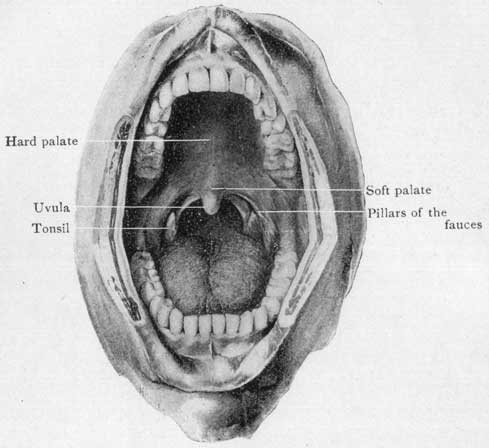
Today, I decided to open my mouth, stick my tongue out, and take a look at the back of my mouth and throat. The photo from the Soft Palate post is helpful.

In doing so, I realized that there's more space back there than I realized. I consciously know that the back of my tongue is the front of my throat, but in observing it in the mirror, I was able to understand how air moves up and out of my wind pipe and into my mouth. I could envision air spilling up and over my tongue. Additionally, I was able to relax my tongue, knowing that only the tip is necessary for articulation. After experimenting, I was able to double-tongue faster and with more "support." 

What does "support" mean? My next post will identify what "support" is and is not.

Friday, August 10, 2012

The Soft Palate

Another quickie:

While attempting to play fluidly in the low register at a warm mezzo-forte, I found myself wanting to adjust to avoid cracked notes. I found myself pulling my embouchure back, which forced me to adjust within my mouth.

I know that being aware of the soft palate and the volume inside the mouth can increase resonance, so I reminded myself to "notice the soft palate," "allow the soft palate to lift."

(The soft palate is the "back" of the roof of the mouth. Trace your tongue along the roof of your mouth moving backwards. Towards the front, the roof of the mouth feels hard. As you move back, you reach a point where it becomes softer, almost squishy. This is the soft palate.) 


Upon bring the soft palate into my awareness, I felt less need to pull my embouchure back. I had more control over my lips to shape the more fluid airstream that I was producing.

I find it helpful to picture the journey of the air while I breathe and play. I remind myself what movements are necessary to breathe, and I inhibit anything that could interrupt a natural breath, such as tension within the mouth.

Air comes first because it creates the sound. The lips shape the air. 

This simple equation reminds me of the fundamentals while practicing, and helps me resolve issues such as cracked notes and lack of resonance.

Relaxed Ears = Better Double-Tonguing?

Goodbye, Hamptons. I've ended work at the golf club and moved back home for a week. This time next week, I'll be in my new apartment in Florida!

I have four days at home to practice and pack, and my flute is like new after a COA. (My repairman is like a therapist. A new cork in the headjoint and I'm smiling once again.)


In my mad rush to feel confident with all of my audition repertoire, I came up with a new, helpful direction to avoid tension while double-tonguing.

I am practicing the third movement of CPE Bach's Concerto in D Minor. It is meant to be incredibly fast: every recording I've heard is a blazing prestissimo. While playing it up to tempo, I noticed tension in my head. It felt like I was tensing my ears.

So, I give myself a healthy intention: "Play with relaxed ears."

Big surprise: Tension reduction led to faster, smoother double-tonguing. (Who knew?!)

Wednesday, August 1, 2012

Making Slow Practice Meaningful

Is it just me? Or am I being haunted by slow practice?


Tons of articles are popping up about slow practice. A stranger visited and discussed it with me in my kitchen. People discuss practicing golf slowly at work. I swear I saw a commercial about it:
Erica Sipes from Beyond the Notes graciously shared these quotes on her Facebook page:

"One must practice slowly, then more slowly, and finally slowly.
-- Camille Saint-Saens

"....You cannot achieve speed by speedy practice. The only way to get fast is to be deep, wide awake, and slow. When you habitually zip through your music, your ears are crystallizing in sloppiness." ....Pray for the patience of a stonecutter. ....Pray to understand that speed is one of those things you have to give up - like love - before it comes flying to you through the back window."
-- The Listening Book by W.A. Mathieu, p. 101.


Slow practice is consuming my thoughts. So how has this influenced my most recent practice sessions?

A quote from Bill Plake sums it up nicely: "The main aim of slow practice: to learn how to move from note to note through release and balance."
Slow practice has become a wonderful opportunity for me to really integrate body mapping techniques. I've become aware of how I change from note to note. I find that I tense my neck at certain moments, my arms at others. It's like turning a microscope on: bad habits jump right out.

It is important to practice with intention. Therefore, a high level of awareness is necessary to observe, experiment, discover, and memorize healthy performance habits. And there are many things to become consciously aware of when practicing. 

When I practice slowly, I'm memorizing how it feels to play with... inclusive awareness, balance, freedom at the joints, awareness of spinal movements, a grounded feeling/equal contact of feet on the floor, freedom of the jaw and face, space between the teeth, freedom of the tongue, effective volume of the oral cavity, ease of vision, a feeling of release in the arm structures, awareness of rib movement, inhibition of my habit to maintain expansion by tensing...

And I used to think slow practice was boring.

While practicing with physical awareness, I'm naturally finding a greater musical awareness.

I continuously find that performing with ease of the body leads to easy, natural expression. Logical phrases feel intuitive. Interpretations become more compelling. Breathing is not a concern. All of it feels easy. 

That's why I'm practicing slowly.


Thursday, July 26, 2012

How to Cope With a Bad Tone Day

We all have bad tone days. They are usually accompanied by the words: "I can't play." Or "I sound like a third grader." On such days, I typically want to crawl back into bed or change my major.

I don't dive right into long tones on "bad tone days." I use long tones to memorize how it feels to play with ease and resonance. I start them once they feel more productive than frustrating. 


These things make me feel better:
  1. Warm up your body. The body moves best when it is free of tension. Try some tension relieving stretches or yoga poses. Go for a run. Dance in front of a mirror. At UNH, I would walk up and down three flights of stairs to get a drink of water. When I got back to my practice room, my blood was pumping and I could breathe more naturally while playing.
  2. Relax. Reduce stress. Meditate. Take care of something that's taking over your thoughts.
  3. Lay in constructive rest for five to ten minutes. Place your hands on your ribs to feel them moving. Watch your body breathe. Think about the gathering and lengthening of the spine. Release the A-O joint.
  4. "Bobble" at the A-O joint while playing to avoid unnecessary tension.
  5. Check your flute: Leaks can cause an unfocused sound. Some people recommend a COA every year, but I get them done twice a year. It depends on your flute and level of activity.
  6. Is your cork loose?
  7. Blow warm, moist air onto the pads. (James Galways does this in a masterclass video on YouTube. It especially helps with footjoint notes.)
  8. Change rooms, if possible. A livelier room is more forgiving. I like to spend some time warming up in a better room, then return to a dull room so I can hear myself better for tone exercises.
  9. Sing. Do vocal warm-ups. Sing, then play the note.
  10. Sing and play simultaneously. For some reason, I've resorted to sing-playing through the exposition of Mozart's G Major flute concerto as a warm-up. I sound better playing it normally after I've done this.
  11. Do other extended techniques (from Robert Dick's Tone Development Through Extended Techniques) such as whistle tones, timbral trills, multiphonics, bamboo tones... Play through one of Robert Dick's Flying Lessons etudes. These let you work on embouchure flexibility while avoiding straight tone.
  12. Harmonics. Harmonics. Harmonics. There are so many ways to practice them. The most effective for me is playing a harmonic, then slurring to the true fingering. This really helps me to feel a sense of openness and resonance when I play the actual note.
  13. Keep your flute warm. From then end of August to about the end of October, the band room at UNH is about 12 degrees. My flute is cold. My body is cold. It's impossible to sound good. I resorted to bringing a scarf for my flute. Also try complaining until someone turns the air conditioner off. (This does not work at the University of New Hampshire, however.)
  14. Change vowel sounds. Experiment with each possible vowel sound. You might find that your natural tendency isn't the most effective for creating a resonant tone: On "bad days," I realize that my tendency is "eeee" or "ehhh" which results in a thin tone. "Ahhh," "ooooh," and "augh" allow warmer air, producing a warmer sound. Think of how each vowel sound changes the space inside the mouth. Greater volume increases resonance.
  15. If time allows, come back later. I always sound best at night because my body is naturally warmed up from moving all day. As a personal note, I typically have less IBS pain in the evening, making it easier to practice.
  16. Listen to a great recording. Get the flutist's tone in your head.
  17. Mentally practice a tone study. Think about how it would feel and sound when played with ease and resonance. Imagine it three times in a row. Then play it. 
  18. Inclusive awareness. Stop analyzing and just play. Listen back. Get to know the space behind you. Let your sound "open" by not trying
  19. Play in the dugout position, while squatting, while laying on the floor, while bouncing on a balance ball, while pretending to sit on a bench...
  20. Are you covering too much of the embouchure hole? Is your flute too high or low on your chin? If your flute is open-hole, are you covering the holes entirely?
  21. If all else fails,  vivid mental practice can be extremely effective. (Spend time mentally practicing in the morning, then return to your instrument later. You might be surprised!)
How do you cope with a bad tone day?

Wednesday, July 25, 2012

Late-Night Kitchen Recitals // Who Do You Play For?


On Sunday night, we had a late-night visit from two friends of my host family.

One of them went to school for music and is now working in insurance.

My host mentioned that I am a musician, and at 11 pm said, "Go get your flute!"

I played some C.P.E. Bach in a kitchen recital while my roommate was making Muddy Buddies, (known in this house as 'puppy chow.')

The musician in my audience of five was an interesting person to talk to. At first, he didn't say much, but I could he was really thinking. He asked to see my score.

He started asking me questions. The first was, "which part is the hardest for you?"

I pointed out a section in the third movement of the Concerto in D Minor, and explained that it was so difficult because there wasn't a place to breathe. He asked me to play it for him, and he was interested to see how I would handle the passage.

He complimented my technical ability, and then proceeded to analyze my score while I snacked on Muddy Buddies.

He then explained to me and my roommate that he once had a professor tell him, "choosing a major is simply choosing a point of view." Choosing what you study in college influences how you view and interpret the rest of your life. He chose music. So did I. He "views the world in harmonies," and admits that he is influenced by music in his work with insurance. Interesting thought.

Looking at my score again, he asked me if I enjoyed the music I was playing. I was quick to say yes, but he had a different angle in mind. He showed me what he meant by asking me to play one phrase from the Concerto. He asked me to cut the tempo in half. Then again. "Watch this, it's going to feel like a lullaby," he said. He pointed out that there is SO MUCH in that one phrase that needs to be enjoyed. At full speed, most of it gets tossed away. There are complex harmonies in the movement that need to be appreciated.

I read the recent article about slow practice from the Bulletproof Musician the day before, so the idea was on my mind. I told him that I try to practice slowly, but it's mindless. I'm usually just trying to get the notes. The idea of enjoying it, however, was really encouraging. Slow practice is about discovery.

He later asked me, "who do you play for?" I could tell that he was challenging me with a deep and personal question. First I said, "myself." He then led me to answer, "People who appreciate it...People that do this, too." He respected my answer, and told me that I do have a choice.

I recalled the most exciting performances that I've given, and they're the ones in which I was playing for other musicians or a room full of flute players. That might be selfish, but it's honest.

Though I've thought about what I want to do when I graduate, I haven't thought of it in a "choose your audience" kind of way. Music is about communicating with people. Who do you want to communicate with? This is an interesting question to grapple with.

Who do you play for?


Tuesday, July 24, 2012

Tools for a Creative Practice Session

Every time I need to order something from Flute World, I spend hours carefully shopping for everything else I might need so I can have it all shipped at once.

A FluterScooter bag has made its way onto my wishlist, so I've spent an entire day online shopping for anything else I could possibly need until (at least) September.

I came across Jennifer Keeney's Creative Practice Recipes. I've heard wonderful things about them, and I'm currently trying to make my own practice sessions as creative and inspired as possible; I definitely need some outside ideas. There are two sets of Creative Practice Recipes, and unfortunately, set one is back-ordered.

I'm impatient. So in the meantime, I created my own.

I love craft projects. And I REALLY love Staples.

I was showered and at the store before 10am. (On my day off!)


I had two ideas for creative practice tools:

1. Index cards similar to Jennifer Keeney's Creative Practice Recipe cards.
2. Popsicle stick practice prompts.

 
For the popsicle sticks (which were hard to come by in the Hamptons), I bought pencil cups and sticky labels. Each cup is a category: 


I have tons of tone and technique exercises that I love doing, but I can't do all of them in their entirety every day. There are just too many. I've tried making calendars and schedules for each, but it was too complicated and overwhelming. 

I'm excited about this.

The popsicle sticks in the Technique cup each have a different technique exercise, such as Taffanel-Gaubert #1, thirds, extended scales, arpeggio trill study... etc. The tone cup is similar.

I created a stick for each major and minor key, and a variety of articulations, as well. 

The "How?" cup contains adjectives that can govern style, color, vibrato, and so forth: Dark, ethereal, Baroque, stormy, tenderly, mysteriously, sensually, like a cello...

I'm planning to use them in several ways:
  • Choose three major keys each day (and their relative minor keys), and do all of the technique exercises in those keys. Don't put them back in the cup until you've gone through all keys.
  • Choose several technique exercises, do them in all keys, and use different articulations/styles.
  • Experiment with different styles in etudes and repertoire.

I also bought an index card box to contain my own Creative Practice Recipes. I'm planning to include my favorite Body Mapping reminders, stretches, yoga breathing exercises, quotes from teachers and master classes, and anything else that might be a helpful reminder or a creative solution.

I'm looking forward receiving a new FluterScooter bag and Jennifer Keeney's Creative Practice Recipes soon!

Jennifer Keeney's website features tons of wonderful and inspiring articles. As does her blog: http://practiceideasforthewholemusician.blogspot.com/

I'm thinking of purchasing her ebook as well: http://www.jenniferkeeney.com/proddetail.asp?prod=231_eBook


I've created new inspirational flute boards on my Pinterest, too: http://pinterest.com/stuffahju/

Have you used Jennifer Keeney's Recipes?

How do you practice creatively?


Saturday, July 21, 2012

( r e v e l a t i o n s } Friday July 20th

Blogging from work now. Oops.
  
I made a discovery about tone and resonance in an incredibly concise practice session yesterday.
  
At the ARIA master class in 2010, Judith Mendenhall instructed us to play with "3 balloons in your chest and 3 eggs in your mouth"  to help us remember that space in the mouth is important for resonance.

I was reminded of the space in my mouth while practicing Prelude to the Afternoon of a Faun. I played this excerpt for my Ohio State audition in January and it led Katherine Borst Jones to give me a mini-lesson on resonance right on the spot. She instructed me to "drop my Adam's apple" at the time.

Yesterday, however, I noticed that when I try to "drop my jaw" or "open my throat," I do just that. I try. I did achieve some slight improvement after I instructed myself to "open my throat," but before I got too excited, I considered that there might be a better way. 

Effortless is the way to go!

I released tension in my mouth. I stopped forcing and just allowed myself to feel a larger volume of space. Simply changing my approach to become less "do this" and more "allow this" made a wonderful difference. I noticed that "open throat" feeling without actually having to do anything. 
  
The "It-feels-like-I'm-doing-nothing-and-yet-my-tone-is-gorgeous-and-I-have-enough-air" feeling is the best. 
 
Asking myself "How effortless can I make _________?" helps me get there.

Thursday, July 19, 2012

Play the Music, Not the Flute

Have you ever heard a recording of a 'standard' that seems to trump all others?

There are more than 50 videos of Poem by C. T. Griffes on just the first three pages of YouTube. There are at least 16 recordings available from Flute World. 

So why do I prefer Amy Porter's performance above all others?

(http://www.youtube.com/watch?v=XeghC40leAU) 

She holds my attention from start to finish.
In my opinion, this is the most engaging recording of Poem that I've heard: I'm able to get a grasp on the entire piece. I hear a journey from start to finish. I hear more of Griffes.

Her interpretation is so compelling not because it is more perfect than any other, but because it is well-planned and the piece is effectively communicated.